
National Forage Week 2026 celebrates forages as foundation of resilient lands
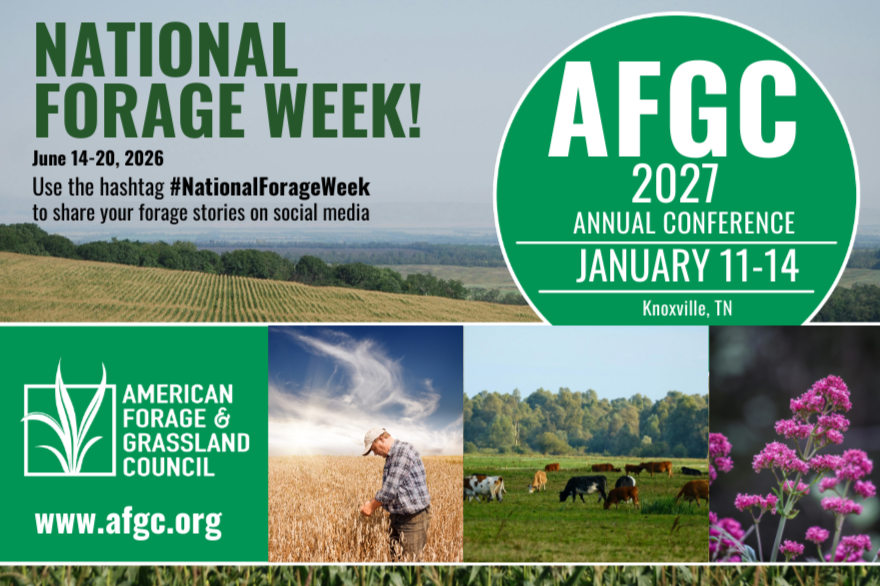
The American Forage and Grassland Council proudly announces National Forage Week 2026, to be observed June 14–20, 2026, highlighting the essential role of forage and grassland systems in building resilient working lands, strengthening rural economies, and sustaining livestock agriculture for future generations.
The 2026 theme, “Forages for Resilient Landscapes and Productive Futures,” emphasizes how well-managed forage systems help producers adapt to weather variability, improve soil and water resources, and support economically viable livestock operations while delivering broad public benefits.
Forage systems cover hundreds of millions of acres across the United States and form the backbone of grazing lands, hay production, and integrated crop–livestock systems. These systems are uniquely positioned to address today’s agricultural challenges while preparing working lands for the future.
Here’s how forages make a difference
Resilient Working Lands
Forage and grassland systems protect soil from erosion, increase water infiltration, and enhance drought and flood resilience, helping producers manage risk.
Soil Health and Carbon Stewardship
Perennial and rotational forages improve soil structure, increase organic matter, and promote biological activity which are key components of long-term soil productivity and carbon storage.
Natural Resource Stewardship
Well-managed forage systems reduce nutrient runoff, protect water quality, and support cleaner air and water, aligning agricultural productivity with environmental responsibility.
Support for Livestock and Production Agriculture
Forages provide high-quality, cost-effective feed that underpins the efficiency and profitability of beef, dairy, sheep, and goat operations across the nation.
Biodiversity and Wildlife Habitat
Forage lands support diverse plant communities, pollinators, grassland birds, and wildlife, contributing to healthy and balanced ecosystems.
Rural Economies
Forage-based livestock systems sustain rural communities by reducing feed costs, supporting local businesses, and creating opportunities for value-added and regional agricultural enterprises.
Public and Cultural Benefits
Forage landscapes provide scenic open space, recreational opportunities, and preserve the cultural heritage of grazing and grassland stewardship across rural America.
As we observe National Forage Week 2026, AFGC encourages farmers, ranchers, landowners, educators, researchers, and conservation professionals to share their forage stories, recognize local stewardship efforts, and celebrate the vital role forages play in sustaining productive agriculture and healthy landscapes.
For more information about National Forage Week and AFGC resources, visit the AFGC website.